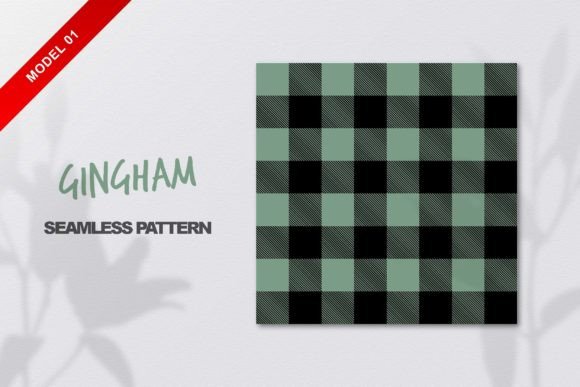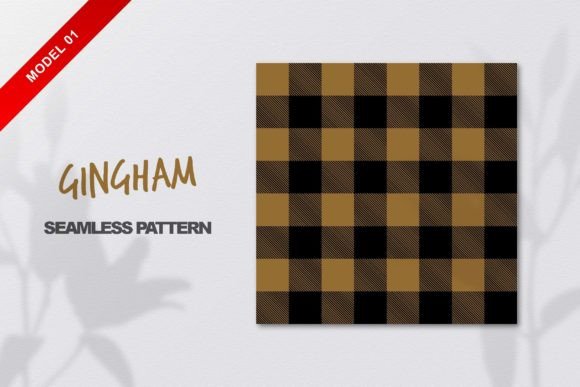
Brown Gingham Seamless Pattern
Gingham isn’t just a nostalgic textile—it’s a quietly resilient design language. When rendered in warm, earthy brown tones and built as a seamless pattern, it bridges heritage and modernity in ways that feel both grounded and intentional. The Brown Gingham Seamless Pattern offered here isn’t a static image pulled from a stock library. It’s a living, scalable resource: 100% vector, fully editable, and built for real-world use across digital and print workflows.
Why Seamless Matters—Beyond the Obvious
A seamless pattern repeats without visible edges or breaks—no awkward seams, no pixelated joins, no manual tiling headaches. That technical detail has real consequences for how efficiently you work. Designers layer it into packaging mockups; educators use it as subtle background texture in presentation decks; small-business owners apply it to Shopify banners or Instagram story templates. With a seamless foundation, you’re not just saving time—you’re avoiding visual friction that can undermine professionalism.
This particular Brown Gingham Seamless Pattern ships with two core files: one EPS CC file (compatible with Adobe Illustrator CC and newer) and one high-resolution JPG at 4750 × 4750 px. That size isn’t arbitrary—it’s calibrated for clarity on large-format prints (think wall decals, fabric swatches, or trade show backdrops) while remaining crisp on retina displays and social thumbnails. The EPS ensures infinite scalability without quality loss; the JPG delivers immediate usability where vector support isn’t available—like in Canva, PowerPoint, or basic web CMS editors.
Vector-First Design Meets Everyday Flexibility
Saying something is “100% vector” sounds technical—but its practical value is straightforward: you can recolor it in seconds, adjust line weight, isolate individual gingham squares, or even convert sections into cut files for vinyl or laser cutting. Unlike raster-only patterns, this Brown Gingham Seamless Pattern doesn’t degrade when zoomed, stretched, or repurposed across mediums. A freelance illustrator might tweak the spacing to create a custom grid for a client’s stationery suite. A product photographer could overlay it subtly behind ceramic mugs in e-commerce imagery—then shift the hue to match seasonal branding.
That flexibility aligns with how creative professionals actually work today: fluidly, across tools, often solo or in lean teams. There’s less tolerance for assets that lock you into one software, one color scheme, or one output size. Vector-based seamless patterns meet that need—not as a luxury, but as baseline utility.
How Brown Shifts the Gingham Conversation
Classic gingham leans red-and-white or blue-and-white—familiar, cheerful, sometimes clichéd. Brown gingham introduces quiet sophistication. It reads as warm but neutral, structured but approachable. In interior design, it pairs naturally with natural wood, linen, terracotta, and matte black fixtures. In branding, it signals authenticity and craft—think artisanal coffee roasters, sustainable apparel labels, or mindful wellness studios. It avoids the sterility of grayscale while sidestepping the intensity of saturated primaries.
This tonal shift reflects broader aesthetic movement: away from maximalist contrast and toward layered, textural harmony. Consumers—and creators—are increasingly drawn to palettes that feel intentional rather than incidental. Brown gingham fits that mindset without demanding attention. It supports rather than competes. And because it’s seamless and vector-based, it adapts cleanly to those evolving preferences—whether you’re softening a website background or reinforcing brand cohesion across physical packaging and digital ads.
Real Workflows, Real Use Cases
Here’s how users are integrating this Brown Gingham Seamless Pattern into actual projects:
- Small-batch product labels: A candle maker uses the EPS file to create die-cut label backgrounds, adjusting stroke width to match their minimalist typography—then exports to PDF/X-4 for print-ready files.
- Educational slide decks: A university lecturer applies the JPG version as a low-opacity background in Google Slides, creating visual consistency across 40+ slides without slowing down load times or triggering accessibility alerts.
- Web design systems: A freelance UX designer imports the vector into Figma via SVG conversion, then builds a reusable “texture layer” component—adjustable via color variables and scale controls—for client design systems.
- Social media templates: A content creator drops the JPG into Canva, resizes it to fit Instagram Reels dimensions, and overlays quote text using a consistent font hierarchy—no stretching, no blurring, no re-uploading needed.
Notice what’s absent from these examples: complex tutorials, plugin dependencies, or multi-step conversions. The strength lies in simplicity—built-in compatibility, clear file structure, and predictable behavior across platforms.
What Changes When You Own the Source File?
Ownership matters—not as a legal abstraction, but as creative agency. When you have the original EPS, you’re not borrowing a pattern. You’re stewarding a tool. You decide whether the gingham squares are tight and precise (for tech or academic contexts) or slightly irregular (to evoke hand-drawn warmth). You choose whether to mute the brown with a 10% opacity overlay—or boost contrast for tactile emphasis.
This level of control responds to a growing expectation: that digital assets should behave like physical ones—modular, durable, and responsive to context. It’s why designers increasingly avoid “one-size-fits-all” downloads in favor of purpose-built, well-documented resources. The Brown Gingham Seamless Pattern fits that standard by design—not marketing.
Thinking Ahead—Without Overpromising
Will gingham dominate design trends for the next five years? Probably not—and that’s okay. Its endurance comes from adaptability, not dominance. What’s more relevant is how tools like this pattern support long-term workflow health: reducing repetitive tasks, minimizing asset fragmentation, and keeping creative energy focused on decisions that matter—like voice, audience alignment, and emotional resonance—not file format troubleshooting.
As remote collaboration deepens and cross-platform publishing becomes routine, the demand for interoperable, intelligently sized assets will only increase. Patterns built with clarity (like this Brown Gingham Seamless Pattern), intention (brown as a versatile, inclusive neutral), and technical rigor (vector + high-res JPG) don’t chase trends—they help professionals navigate them with less friction and more confidence.
Final Thought: Creativity Needs Infrastructure
We often talk about creativity as inspiration or talent—but it also depends on infrastructure. Reliable fonts. Predictable color models. Consistent grid systems. Seamless, scalable patterns. This Brown Gingham Seamless Pattern is infrastructure. It’s the quiet layer beneath stronger work—not the headline, but the foundation that lets the headline land with clarity and cohesion.
If you’re evaluating whether it fits your needs, ask: Does it save me time across at least two different project types? Can I modify it without breaking it? Does it look intentional—not generic—at multiple sizes and contexts? If the answer is yes, then it’s doing its job. And if questions come up along the way—about resizing, recoloring, or integration—reach out. Support isn’t an afterthought here. It’s part of the design.