Coffee Pattern
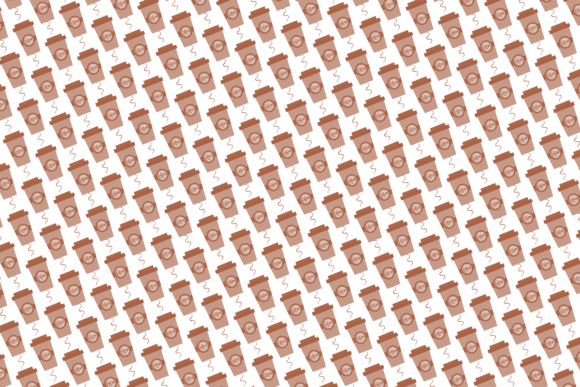
A Coffee Pattern refers to a repeatable, tileable design motif inspired by coffee-related visual elements—such as coffee beans, steam swirls, latte art, abstract espresso textures, or minimalist mug silhouettes. These patterns are created digitally with consistent spacing, balanced negative space, and intentional repetition to ensure seamless tiling across surfaces. Unlike standalone illustrations or photographs, a Coffee Pattern is engineered for scalability and adaptability: it repeats without visible seams, making it suitable for both small-scale applications like icons or labels and large-format uses such as wall murals or fabric yardage.
People often explore Coffee Pattern resources when planning creative projects that require cohesive, thematic visual consistency. This includes designers developing product lines (e.g., mugs, tote bags, stationery), self-publishing authors creating low-content books (like coffee-themed journals or planners), or crafters producing custom wrapping paper or home décor items. Because the pattern is inherently modular, it supports efficient production workflows—especially when integrated into print-on-demand platforms or digital design tools like Canva, Adobe Illustrator, or Procreate.
The versions described—PNG and JPG files at 5000px × 5000px resolution and 300 dpi—are optimized for high-fidelity printing. The PNG format preserves transparency, which is essential for layering over photos, gradients, or colored backgrounds in layout software. The JPG version offers broad compatibility and smaller file sizes, ideal for web previews or quick mockups where transparency isn’t needed. Both formats provide sufficient pixel density for professional-grade output up to approximately 16.7 inches × 16.7 inches at 300 dpi—a common maximum size for many commercial printers and print-on-demand services.
One key benefit of using a Coffee Pattern in this format is flexibility across media. A single pattern can serve multiple purposes: as a background for social media templates, as a repeating motif on fabric for aprons or tea towels, or as interior page fills in undated planners. Its digital nature means no inventory management, shipping delays, or physical storage concerns—only download, integrate, and use. For creators managing multiple product lines or seasonal collections, this reduces setup time and increases consistency across offerings.
However, users should consider several practical tradeoffs. First, while 5000px × 5000px is generous for most applications, it may not suffice for extremely large-scale outputs—such as billboard graphics or floor decals—where higher native resolution or vector-based alternatives would be preferable. Second, raster formats (PNG/JPG) do not scale infinitely without quality loss; enlarging beyond their native dimensions risks pixelation. Third, because these are static, pre-rendered files, customization options are limited to what’s included in the download—no built-in color-swapping, element rearrangement, or style variation unless edited manually in image-editing software.
Another consideration is licensing scope. Since this is a digital product with no physical shipment, usage rights depend entirely on the terms provided by the seller. Some licenses permit commercial use across unlimited products; others restrict resale or require attribution. Buyers should verify whether the license covers their intended application—particularly if distributing derivative works (e.g., printed notebooks sold via Amazon KDP) or incorporating the pattern into client deliverables.
A Coffee Pattern in this format is a strong fit when your goals include: launching a themed merchandise line with tight turnaround times; building a cohesive brand aesthetic around coffee culture; or producing printable resources like coloring pages, planner inserts, or gift tags. It also suits educators or workshop facilitators designing coffee-related educational materials—such as flashcards or classroom posters—where visual continuity supports learning objectives.
Conversely, alternatives may be worth considering in certain cases. If you need full creative control over individual elements—for example, adjusting bean placement, altering steam curvature, or animating a latte art swirl—a vector-based pattern (e.g., SVG or AI file) would allow non-destructive editing and infinite scalability. Similarly, if your project requires dynamic or responsive behavior—such as a website background that adapts to screen size—a CSS-generated pattern or SVG tile may offer more technical flexibility than a fixed-raster image. For highly specialized applications like embroidery digitizing or laser-cut stencils, source files with defined paths and layers (rather than flattened raster images) are typically necessary.
It’s also important to assess alignment with your workflow. If you primarily use mobile design apps with limited support for large raster files, a 5000px × 5000px image may exceed memory or import limits. In contrast, desktop-based tools like Affinity Designer or Photoshop handle such dimensions routinely. Likewise, if your output process relies heavily on automated templates (e.g., bulk generating mug mockups), having a transparent PNG simplifies background replacement—whereas a JPG would require additional masking steps.
When evaluating whether this Coffee Pattern meets your needs, ask yourself three questions: First, does the visual style match the tone and audience of your project? A whimsical doodle-style pattern may suit a café’s Instagram feed but feel incongruous in a premium ceramic brand’s packaging. Second, does the resolution and format align with your output method? Confirm that your printer, platform, or design tool accepts 5000px × 5000px raster files at 300 dpi before purchase. Third, does the license explicitly cover how and where you intend to use it? Commercial use permissions vary widely—even among seemingly similar products—and assumptions can lead to compliance issues down the line.
Finally, consider long-term maintainability. Raster-based patterns are straightforward to implement but less adaptable over time. If your brand evolves or expands into new product categories—say, from mugs to apparel—you may eventually need variants with different scales, densities, or color palettes. Having access to layered source files (if offered separately) or working with a designer to create derivatives can extend utility, but those options fall outside the scope of a standard Coffee Pattern download.
In summary, a Coffee Pattern delivered as high-resolution PNG and JPG files serves a specific, well-defined role in the creative toolkit: enabling fast, reliable, print-ready implementation of coffee-themed visuals across diverse physical and digital products. Its value lies not in novelty or exclusivity, but in functional consistency and production efficiency. Whether it’s the right choice depends less on general appeal and more on how precisely its technical attributes—resolution, format, licensing, and design intent—map to your project requirements and operational constraints.