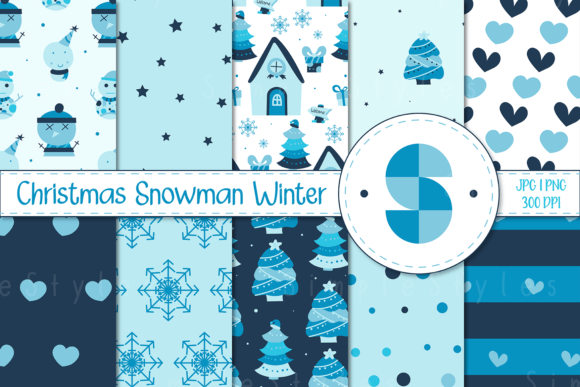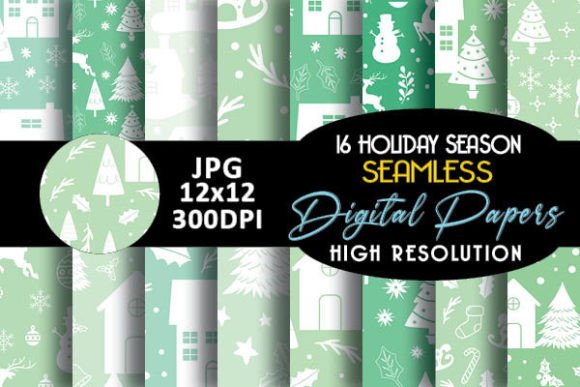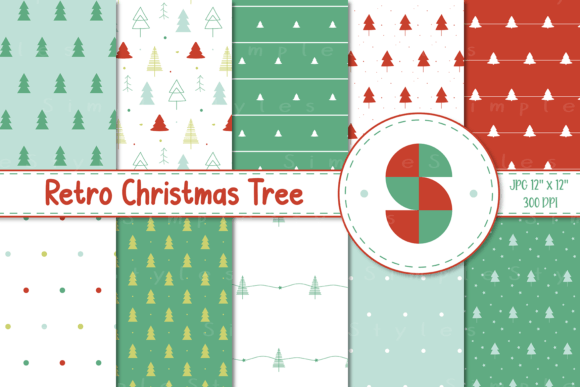
Retro Christmas Tree Digital Papers
Retro Christmas Tree Digital Papers refer to a curated collection of high-resolution, printable patterned backgrounds featuring stylized, nostalgic interpretations of Christmas trees—think mid-century motifs, vintage color palettes (think mustard yellow, olive green, rust, and cream), and playful linework or halftone textures. These are not standalone illustrations or clipart, but seamless, repeatable background designs intended for digital crafting and print production.
This particular bundle includes 10 distinct designs, each delivered as a JPG file at 12 x 12 inches and 300 dpi resolution. The files are optimized for clarity and fidelity when printed at full size, making them suitable for both personal craft projects and commercial applications—provided licensing terms allow it.
Why Consider Retro Christmas Tree Digital Papers?
Designers, small-business owners, educators, and hobbyists often seek digital papers that balance aesthetic appeal with functional versatility. Retro Christmas Tree Digital Papers meet this need by offering a cohesive seasonal theme grounded in design history—not just festive, but intentionally evocative of specific eras (e.g., 1950s–1970s). This makes them especially useful when consistency matters: for example, building a unified product line for holiday stationery, maintaining brand tone across social media graphics, or creating themed planner inserts that feel intentional rather than generic.
Unlike photorealistic or modern minimalist Christmas assets, retro patterns introduce warmth, texture, and visual rhythm without overwhelming layouts. Their seamless nature means they tile predictably—important for large-format prints like wallpaper or fabric mockups—or scale reliably across smaller items like gift tags or recipe cards.
Practical Benefits and Real-World Use Cases
The 300 dpi resolution ensures sharp output for physical products. Users report successful results printing on cardstock for greeting cards, applying to sticker sheets via inkjet or laser printers, and embedding into KDP interior layouts for holiday-themed journals or coloring books. Because the files are JPG-based—not layered PSD or vector AI—they’re immediately compatible with most design software (Canva, Cricut Design Space, Affinity Designer, Adobe Photoshop) and require no additional editing to use.
Common applications include:
- Creating cohesive party sets (invitations, menus, place cards, and thank-you notes)
- Designing printable wall art or framed posters for seasonal decor
- Building custom planner stickers or junk journal ephemera
- Producing branded packaging elements such as jar labels or candy wrappers
- Developing photo book backgrounds or scrapbook page foundations
- Generating fabric print mockups or textile design studies
Each design functions independently, allowing users to mix and match based on color scheme or motif preference—useful when developing multi-product collections where variation supports perceived value.
Tradeoffs and Important Considerations
JPG format limits flexibility compared to vector or layered file types. Users cannot easily recolor individual elements (e.g., change the tree’s trunk from brown to black) or isolate components without manual masking or redrawing. If precise color control or scalability beyond 12 x 12 inches is required, alternatives like SVG or EPS bundles may be more appropriate—even if they cost more or demand greater technical familiarity.
Additionally, while “retro” implies stylistic cohesion, interpretations vary. Some designers associate retro with bold geometric shapes; others expect hand-drawn imperfections or grainy film textures. Reviewing preview thumbnails carefully helps confirm alignment with your definition—and avoids mismatched expectations during production.
Licensing is another key factor. Although many digital paper bundles permit commercial use, terms differ across sellers. Always verify whether the license covers physical resale (e.g., printed greeting cards sold on Etsy), digital resale (e.g., pre-made Canva templates), or only personal use. Using these papers in KDP interiors is generally acceptable—but check the seller’s stated terms before publishing.
When This Bundle Is a Strong Fit
This collection works well for creators who prioritize speed, thematic consistency, and print-ready quality over deep customization. It suits those producing multiple related items within a tight timeline—such as a small-batch holiday shop launching coordinated stickers, gift tags, and recipe cards. Educators preparing seasonal classroom materials or community center staff designing event flyers also benefit from the ready-to-use nature and nostalgic warmth.
It’s also practical for users working primarily in raster-based tools or platforms with limited import options (e.g., basic versions of Canva or Silhouette Studio). Since no special software or skills are needed to implement the files, the barrier to entry remains low.
When Alternatives May Be Worth Exploring
If your workflow relies heavily on scalable graphics—for instance, adapting designs for embroidery digitizing, laser-cutting templates, or responsive web backgrounds—vector-based retro Christmas patterns (in SVG or AI format) offer greater adaptability. Similarly, if you need editable layers (e.g., separate tree, ornament, and background layers for rearranging), PSD or layered PNG bundles would provide more control—even if they require more setup time.
For users seeking broader seasonal variety beyond trees—such as retro snowflakes, ornaments, or typography—bundles labeled “Retro Holiday Digital Papers” or “Vintage Christmas Mega Bundle” may deliver more coverage per dollar. And if color accuracy is mission-critical (e.g., matching corporate brand guidelines), RGB-to-CMYK conversion testing and printer calibration become necessary steps—something simpler bundles don’t address but professional design services might support.
Making an Informed Choice
To determine whether Retro Christmas Tree Digital Papers align with your goals, ask three questions:
- What output format do I need? If you’re printing physical goods at home or through a service, JPG at 300 dpi is sufficient. If you’re designing for digital-only distribution or require infinite scaling, consider vector alternatives.
- How much design control do I need? If swapping colors, adjusting spacing, or isolating elements is routine, layered or vector files will save time long-term—even if the initial learning curve is steeper.
- Does the aesthetic match my audience’s expectations? Preview how the patterns appear alongside fonts, photos, and other assets you plan to use. A mismatch between retro paper and modern sans-serif type, for example, can unintentionally dilute the intended mood.
Finally, compare file count, resolution, and licensing scope across similar bundles—not just price. Ten well-executed, truly seamless patterns often prove more valuable than twenty lower-resolution or inconsistently styled ones.
Retro Christmas Tree Digital Papers serve a specific, practical niche: delivering nostalgic charm with minimal friction. When used thoughtfully—and with awareness of their format limitations—they support efficient, visually grounded creative work across a wide range of holiday-related outputs.