Glittery Cannabis Leaves: Seamless Vector Patterns for Professional Design Workflows
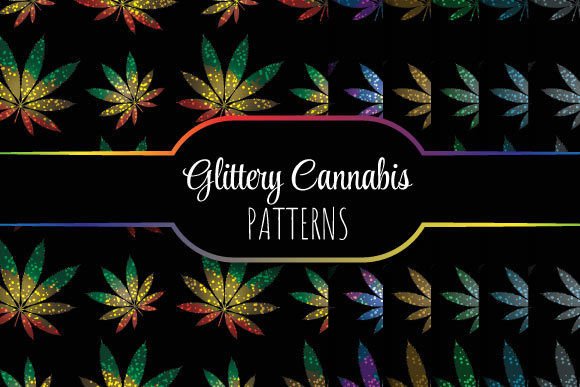
Glittery Cannabis Leaves is a high-resolution, repeatable vector pattern designed for precision-critical creative and commercial applications. Each file measures 12 × 12 inches at 3600 × 3600 pixels and 300 dpi — meeting print-ready standards without upscaling or interpolation. The package delivers one EPS 10 file (fully editable in Adobe Illustrator and compatible with CorelDRAW, Affinity Designer, and InDesign) plus six JPEG variants optimized for quick preview, web embedding, and layout testing. All files are bundled in a single ZIP archive for immediate access and version control.
Where Glittery Cannabis Leaves Fits in Your Production Pipeline
This asset isn’t meant to sit unused in a downloads folder. It enters your workflow where visual consistency, brand-aligned texture, and production efficiency intersect — most often during the asset preparation or layout phase of a project. For example, a small business owner designing custom packaging for a wellness product line might use Glittery Cannabis Leaves as a background motif on labels, boxes, or promotional banners. A freelance graphic designer building a social media campaign for a lifestyle brand may layer it beneath typography to add tactile depth without compromising legibility. An educator creating printable study guides or workshop handouts can apply it subtly to section dividers or headers — reinforcing thematic cohesion without distracting from content.
Its seamless tiling behavior means it scales infinitely across surfaces — whether you’re filling a full-page brochure background or repeating it as a subtle border on a presentation slide. Unlike raster-based textures that pixelate when enlarged, the vector foundation preserves crispness at any size, making it equally viable for large-format prints like trade show backdrops and small-scale outputs like business cards or stickers.
Integration Before, During, and After Key Milestones
Before launch or delivery: Use Glittery Cannabis Leaves early in mockup stages to test how the pattern interacts with typography, color palettes, and adjacent assets. Its glitter effect adds dimensionality — so previewing it alongside real fonts and brand colors helps avoid last-minute contrast or readability surprises. If you’re collaborating with a printer, share the EPS file directly; its native vector format ensures accurate RIP processing and avoids embedded JPEG artifacts.
During active design work: Keep the EPS file open in Illustrator while building layouts — then copy-paste or drag-and-drop the pattern into layers as needed. Because it’s built to tile seamlessly, you won’t need to manually align edges or mask transitions. For faster iteration, use the included JPEGs in Figma, Canva, or PowerPoint when speed matters more than editability — such as client presentations or internal brainstorming decks.
After finalization: Archive the original ZIP alongside your project files. Name it clearly (e.g., glittery-cannabis-leaves-v1-eps-jpgs.zip) and document usage context in your project README or asset log. This supports future revisions, audits, or licensing verification — especially important if the pattern appears in publicly distributed materials or client deliverables.
Compatibility and Cross-Platform Usability
The EPS 10 format ensures broad compatibility without sacrificing fidelity. It opens natively in Adobe Creative Cloud apps (Illustrator, InDesign, Photoshop via Place), works reliably in older versions of CorelDRAW (X7+), and imports cleanly into Affinity Designer (v1.10+). For users relying on non-Adobe tools, the included JPEGs serve as reliable fallbacks — each saved with embedded color profiles (sRGB for screen, CMYK for print prep) and named by resolution and use case (e.g., glittery-cannabis-leaves-3600x3600-cmyk.jpg).
When integrating into templates or style guides, treat Glittery Cannabis Leaves like any core brand asset: define clear usage rules. Specify minimum scale thresholds (e.g., “never reduce below 25% of original dimensions in print”), acceptable contrast ratios against text overlays, and prohibited contexts (e.g., avoid pairing with competing botanical motifs unless intentionally curated). Consistency here prevents visual fatigue and strengthens recognition over time.
Practical Implementation Tips for Real Workflows
- Organize proactively: Extract the ZIP into a dedicated subfolder within your project’s /assets/textures/ directory. Add a README.md noting version, license scope, and approved use cases — especially if sharing with team members or contractors.
- Test before committing: Apply the pattern to a representative layout element (e.g., a 4×6 inch label or a 1920×1080 social post) and export PDF/X-4 or PNG-24 previews. Check for moiré effects under zoom, edge alignment at tile boundaries, and how glitter highlights render across devices.
- Optimize for output: For digital-only projects, use the sRGB JPEGs. For mixed-use workflows, keep the EPS as your master and generate derivative JPEGs only as needed — avoiding unnecessary duplication or version drift.
- Preserve editability: When placing the EPS in InDesign or Illustrator, choose “Link” rather than “Embed” unless edits are required. Linked files update globally if you revise the source, reducing manual sync effort across documents.
- Consider accessibility: While decorative, patterns like Glittery Cannabis Leaves shouldn’t interfere with WCAG-compliant contrast. If used behind text, verify foreground/background luminance meets AA standards (4.5:1 for normal text). Tools like Stark or axe DevTools help validate this quickly.
Long-Term Value and Quality Control
Because Glittery Cannabis Leaves ships with both vector and raster derivatives, it supports evolving needs without requiring reacquisition. As your projects shift from static PDFs to interactive PDFs, web embeds, or motion graphics, you’ll find uses for different file types — not just the EPS. That flexibility extends shelf life: an asset acquired today remains functional five years from now, even as software updates or output requirements change.
Quality control starts with verifying integrity upon download: open the EPS in Illustrator and confirm no missing fonts or linked images appear in the Links panel. Check that the JPEGs render uniformly — no banding, compression artifacts, or color shifts between files. If discrepancies arise, re-download the ZIP rather than attempting local fixes; consistency across formats is intentional and tested.
For teams managing multiple designers or agencies, standardize naming conventions and storage paths. A shared cloud folder with clear permissions — paired with a lightweight asset registry spreadsheet — ensures everyone accesses the same version and understands approved applications. This reduces redundant requests, misaligned usage, and revision delays.
Real-World Use Cases Across Roles
A marketer launching a limited-edition product drop might use Glittery Cannabis Leaves as a background for email headers and landing page sections — then reuse the same JPEG in Instagram Stories and Pinterest pins, ensuring cross-channel harmony. A publisher developing a wellness-themed workbook could apply the pattern to chapter openers and section dividers, giving readers visual rhythm without overwhelming content. A hobbyist creating handmade greeting cards might import the EPS into Silhouette Studio or Cricut Design Space, scaling it precisely for foil-embossed cardstock cuts.
What ties these examples together isn’t novelty — it’s reliability. Glittery Cannabis Leaves delivers predictable performance: no unexpected rendering quirks, no licensing ambiguity, no hidden dependencies. That predictability lets professionals focus energy where it matters — strategy, messaging, user experience — rather than troubleshooting assets.
It doesn’t replace thoughtful design decisions. Instead, it supports them — quietly, consistently, and at production scale.