Maze Pattern Set 20: A Practical Evaluation for Design Professionals
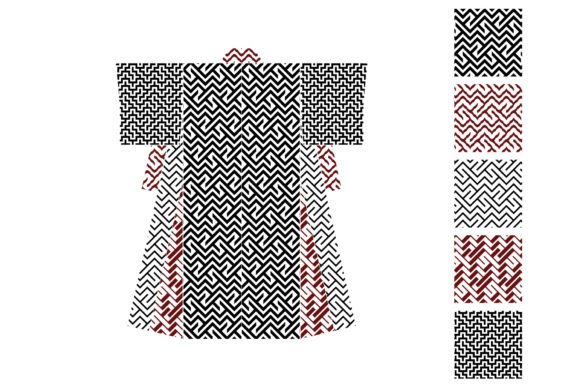
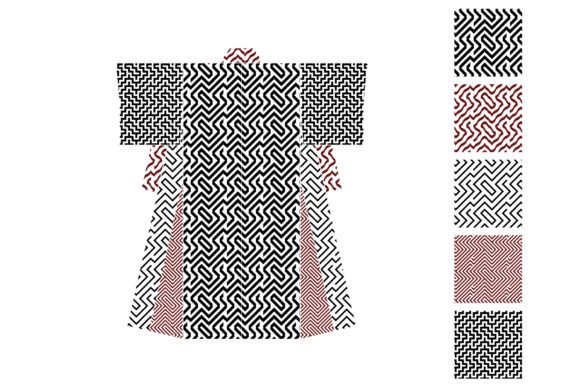
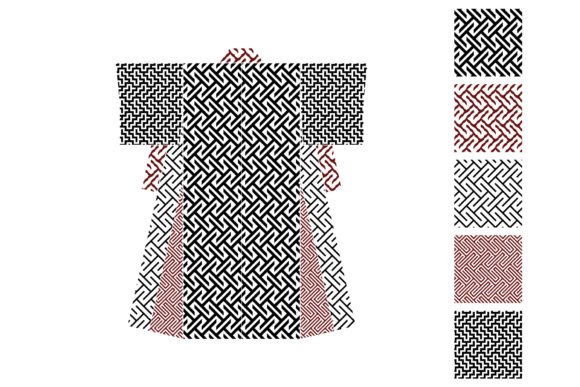
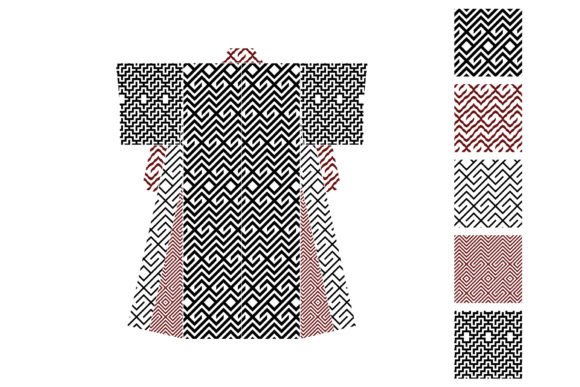
Maze Pattern Set 20 is a curated digital asset collection comprising five high-resolution, AI-compatible EPS files of labyrinth-style geometric patterns. Designed for compatibility with Adobe Illustrator CS6 and later, the set is marketed for use across textile design—including batik, wagara (traditional Japanese motifs), hanfu, cheongsam, hanbok, and Korean-inspired textiles—as well as interior applications such as laser-cut aluminum partitions, tatami borders, kimono linings, and seamless surface repeats. It also supports broader decorative contexts like wall panels, packaging, and architectural detailing.
Why Designers Consider Maze Pattern Set 20
Designers often seek pattern sets that bridge cultural specificity with technical flexibility. Maze Pattern Set 20 appeals to those working on projects requiring structured repetition, symbolic continuity (as labyrinths carry historical resonance in East Asian, Islamic, and European traditions), or scalable vector assets for precision manufacturing. Its inclusion of seamless swatches suggests utility in textile printing workflows, while the EPS format ensures scalability without raster degradation—critical when adapting motifs for embroidery digitizing, CNC routing, or large-format wall graphics.
Users evaluating this set typically fall into two groups: those developing culturally grounded apparel or home goods, and those specifying decorative elements for commercial interiors. In both cases, the need for editable, resolution-independent vectors—rather than fixed-dimension PNGs or JPEGs—is a consistent driver.
Key Benefits and Realistic Expectations
The primary benefit of Maze Pattern Set 20 lies in its format and scope. Each of the five labyrinth patterns is delivered as an AI-compatible EPS file, supporting non-destructive editing of strokes, colors, and spacing in Illustrator. This allows designers to adjust line weight, invert contrast, recolor for fabric dye limitations, or tile at custom intervals—all without quality loss. The seamless nature of the swatches means they can be repeated predictably across surfaces, reducing manual tiling effort.
However, expectations should be calibrated. Maze Pattern Set 20 does not include color palettes, Pantone references, or ready-to-print CMYK separations. It offers no documentation on cultural attribution, historical usage, or regional variations of the labyrinth motif across Chinese, Korean, or Japanese traditions. Users seeking scholarly context or stylistic guidance must supplement this set with external research. Likewise, while labeled “batik” and “wagara”-compatible, the patterns themselves are abstracted geometric labyrinths—not literal reproductions of traditional chrysanthemum, seigaiha, or cloud-band motifs.
Tradeoffs and Technical Considerations
A notable tradeoff is format limitation: EPS compatibility restricts native editing to vector applications like Illustrator. Users relying primarily on Affinity Designer, CorelDRAW, or Figma will need to convert files—potentially losing layer integrity or text-based attributes. While modern Illustrator versions handle EPS well, older or non-Adobe tools may render embedded fonts or gradients inconsistently.
Another consideration is scale dependency. Labyrinth patterns rely on consistent line density and negative space to retain legibility. When scaled extremely small (e.g., for micro-embroidery) or extremely large (e.g., for 3m-high laser-cut partitions), some patterns may require manual adjustment to avoid visual crowding or unintended optical gaps. This is not a flaw in the set but a universal property of geometric repeat structures.
Also note: Maze Pattern Set 20 contains no licensing information in its product description. Users intending commercial production—especially for branded apparel or architectural installations—should verify permitted usage rights separately. Standard licenses for such assets often exclude resale of unmodified patterns or mass production beyond defined unit thresholds.
When Maze Pattern Set 20 Is a Strong Fit
This set is especially suitable for designers who already understand their output requirements and have established workflows in Illustrator. It fits well when:
- You need clean, scalable labyrinth motifs for laser-cut metal or wood partitions where precise vector paths directly drive cutting software;
- Your textile project requires repeatable, editable base patterns to layer with hand-drawn elements or photorealistic textures;
- You’re developing a cohesive design language across multiple product categories (e.g., matching kimono lining, tatami edging, and retail display panels) and value consistency in underlying structure;
- You prioritize file stability over stylistic diversity—five carefully constructed variations offer more control than dozens of loosely related patterns with inconsistent construction logic.
When Alternatives May Be More Appropriate
Maze Pattern Set 20 is less suited for users needing immediate cultural fidelity or rapid prototyping outside Illustrator. Consider alternatives if:
- You require historically accurate wagara, yunjian (Chinese cloud-collar), or gabae (Korean lattice) motifs—specialized collections focused on specific dynastic periods or regional schools provide richer contextual fidelity;
- Your workflow depends on SVG, PDF, or layered PSD formats for web, motion graphics, or cross-platform collaboration;
- You’re designing for digital-only outputs (e.g., NFT textiles or AR filters) where dynamic parameterization—such as variable line thickness controlled via sliders—is more valuable than static EPS files;
- You need pattern variants optimized for specific substrates—for example, batik-resist line width guidelines, or halftone-ready versions for screen printing on silk.
Making a Practical Decision
To determine whether Maze Pattern Set 20 aligns with your needs, begin by auditing your current tools and deliverables. Ask: Do you regularly edit vector patterns in Illustrator? Will these motifs be scaled across multiple physical sizes—from 2cm embroidery repeats to 2m wall panels? Is geometric abstraction acceptable, or do your clients expect motif-specific authenticity?
If your answer to the first two questions is yes, and the third is flexible, Maze Pattern Set 20 offers efficient, technically sound building blocks. If instead you’re early in concept development—or working with teams using mixed software—you may benefit more from pattern libraries with multi-format exports or integrated style guides.
Finally, consider testing one pattern before committing to the full set. Many vendors offer single-pattern previews or low-resolution samples. Rendering a test swatch at your intended output size and substrate helps assess clarity, spacing, and adaptability far more reliably than screen-based evaluation alone.